Showing posts with label Jack Lewis. Show all posts
Showing posts with label Jack Lewis. Show all posts
Monday, 8 November 2010

Tuesday, 2 November 2010
Children's Film: Editing Music
We worked on the music and sound effects for our children's film. First we did research on the kind of music used in children films and what techniques are used in chase scenes. We then took these ideas and incorporated them into our music.
We used GarageBand and found clips of music that we felt fit with our video and made it slightly comical to help lighten the mood and make it more family friendly. we added in fills in the drums and piano solos to keep the music interesting and to add dynamics to our piece.
We also made music for our 'western-style scene' where their is a confrontation between the two supernatural characters. For this we researched more films and examples of old western-films. For example, the iconic scene in "The Good, The Bad and The Ugly" which you can see below. We then went back to GarageBand and found music to best suite our scene. Sound effects were also found on GarageBand. For example, the sound effect when the main character wakes from his dream and the background noise in the corridor.
We used GarageBand and found clips of music that we felt fit with our video and made it slightly comical to help lighten the mood and make it more family friendly. we added in fills in the drums and piano solos to keep the music interesting and to add dynamics to our piece.
We also made music for our 'western-style scene' where their is a confrontation between the two supernatural characters. For this we researched more films and examples of old western-films. For example, the iconic scene in "The Good, The Bad and The Ugly" which you can see below. We then went back to GarageBand and found music to best suite our scene. Sound effects were also found on GarageBand. For example, the sound effect when the main character wakes from his dream and the background noise in the corridor.
 | |
| Our music on GarageBand |
Tuesday, 19 October 2010
Children's Film: Filming Day 2
During filming day two we completed our the rest of the filming. As we have completed the superhero scene, in which the main character is dreaming, we are now able to move onto reality in a school environment. In the filming on day two we were able to film the classroom scene, where our main character wakes up from his dream. We then see a short corridor scene, which includes the 'apple' which we saw in the previous superhero scene. This will enable the audience to see that this character is in-fact the same character as before - just in a different situation/scene. During the corridor scene the apple is destroyed by an by-passer which shows the destruction of hope for the main character. The opening sequence ends shortly after this.
Overall we managed to complete this quickly as the shots were fairly short. We have tried to use a variety of angles to show hierarchy between the teacher and student, we have also used panning, and some different shot distances. From both days of filming I believe that we have used a huge variety of techniques which will make the opening sequence more interesting for the young audience.
We finished the filming day by importing/capturing our footage from the camera onto the computer, which we will be editing in upcoming lessons.
Overall we managed to complete this quickly as the shots were fairly short. We have tried to use a variety of angles to show hierarchy between the teacher and student, we have also used panning, and some different shot distances. From both days of filming I believe that we have used a huge variety of techniques which will make the opening sequence more interesting for the young audience.
We finished the filming day by importing/capturing our footage from the camera onto the computer, which we will be editing in upcoming lessons.
Monday, 18 October 2010
Children's Film: Filming Day 1
Today we began filming our children's film opening sequence. So far we are right on schedule and have been able to finish all of our superhero scene. We were very careful to follow our plan as closely as possible, and tried to use a wide range of angles and locations.
Before our filming began we sorted out the costumes, which I have posted about here. We all brought in a range of different items to create the costumes, which I think have turned out really well.
From filming today I think that our classification might need to be changed from PG to U. This is because we have not used any discrimination and have used minimal violence, and so I believe that the opening sequence would better fit into the U classification. We will later confirm this.
Before our filming began we sorted out the costumes, which I have posted about here. We all brought in a range of different items to create the costumes, which I think have turned out really well.
From filming today I think that our classification might need to be changed from PG to U. This is because we have not used any discrimination and have used minimal violence, and so I believe that the opening sequence would better fit into the U classification. We will later confirm this.
Saturday, 16 October 2010
Children's Film: Target Audience
Our children's film will be aimed at both male and females, as it has aspects within it that will appeal to both genders, especially the comical aspects and the storyline. Our film is a PG (Parental Guidance) but will be bordering Universal (U), this means that the film can be enjoyed by all ages, especially as our film is aimed at a younger audience around the ages 5-10 years old. The reasoning behind this is that whilst the action is filmed in a comedic way, the action brings a 'Mild Threat' level of violence which is acceptable for a Universal (U) classification as well as a Parental Guidance (PG) certification.
The target audience will be interested in school life and they may also be concerned about bullying, as many of the audience would have recently started school. The film brings across the issues of bullying
to condemn bullying, this provides a moral message for children that bullying is wrong. This is not the only moral message that the opening sequence will teach the young audience, there is also morals of justice, good vs bad, and personal growth as a character.
The target audience will be interested in school life and they may also be concerned about bullying, as many of the audience would have recently started school. The film brings across the issues of bullying
to condemn bullying, this provides a moral message for children that bullying is wrong. This is not the only moral message that the opening sequence will teach the young audience, there is also morals of justice, good vs bad, and personal growth as a character.
Friday, 15 October 2010
Children's Film: Filming Time Use
Today we have discussed in our group how we will use props and costumes in advance of filming. This will help us get to work quickly and to use our time effectively to film everything we need.
Day 1: In the media studies corridor and outside, behind C-block.
On day one we will focus on filming the chase/ superhero scene. This is because it will be the hardest part to film and will take the most amount of time. It also means we will only have to bring the costumes in at least one day (unless we don't finish filming that part). We will need to bring in bright clothes and a face mask for the superhero and dark clothes and a face mask for the bad-guy. On top of this we will buy an apple and a burger from the school canteen.
Day 2: In the C-block corridor
On day two we will finish up and bits we had not finished from the superhero scene. Unfortunately, if we do not get it finished on the first day we will have to bring the costumes and props in for another day. After this we will focus on the classroom and corridor scenes. We will not need as many props for this scene, but we will need an apple and a bag for the 'school kid' to hold to make him look like a student. We will also give him some big glasses to make him look like a stereotypical school nerd.
Day 3: C-block corridor and media classroom
On day three of filming we will finish up any scenes that have not yet been completed in the class room and corridor scenes. This will involve bring in the props like we had to in the previous days. however, our superhero scene should be complete by then and so the costumes for that would not be necessary. Once we finish on that day we will start capturing our video from the video and editing the video in final cut express.
Day 1: In the media studies corridor and outside, behind C-block.
On day one we will focus on filming the chase/ superhero scene. This is because it will be the hardest part to film and will take the most amount of time. It also means we will only have to bring the costumes in at least one day (unless we don't finish filming that part). We will need to bring in bright clothes and a face mask for the superhero and dark clothes and a face mask for the bad-guy. On top of this we will buy an apple and a burger from the school canteen.
Day 2: In the C-block corridor
On day two we will finish up and bits we had not finished from the superhero scene. Unfortunately, if we do not get it finished on the first day we will have to bring the costumes and props in for another day. After this we will focus on the classroom and corridor scenes. We will not need as many props for this scene, but we will need an apple and a bag for the 'school kid' to hold to make him look like a student. We will also give him some big glasses to make him look like a stereotypical school nerd.
Day 3: C-block corridor and media classroom
On day three of filming we will finish up any scenes that have not yet been completed in the class room and corridor scenes. This will involve bring in the props like we had to in the previous days. however, our superhero scene should be complete by then and so the costumes for that would not be necessary. Once we finish on that day we will start capturing our video from the video and editing the video in final cut express.
Tuesday, 12 October 2010
Children's Film: Inspector Gadget (Opening Credits)
The opening sequence of Inspector Gadget is based around mechanics, small gadgets and items.
The whole of the intro credits is about numerous small items e.g screws, bolts etc. that come together to form a giant 'G' (for gadget). This ties in with the name of the film and the main character and ties into the theme of the film as the film is about an inspector who invents mechanical parts to make his life easier but sometimes it does not always work out how he expected.
The whole of the intro credits is about numerous small items e.g screws, bolts etc. that come together to form a giant 'G' (for gadget). This ties in with the name of the film and the main character and ties into the theme of the film as the film is about an inspector who invents mechanical parts to make his life easier but sometimes it does not always work out how he expected.
Some of the objects involved in the opening sequence that make up the 'G' are children's toys. This helps children to relate and makes it more interesting for them. it is also colourful to attract the kids attension. Also the Disney logo has been altered to fit in the with theme of the film which is quite unusual.
Monday, 11 October 2010
Children's Film: Music/Sound Analysis (Toy Story)
 Music and sound is really important in a film as it helps the audience to understand what is happening, the mood, atmosphere and also represents the characters. Here we will be analyzing the music/sound used and how it shows the audience genre, narrative and character representation.
Genre: The music used in the opening sequence of Toy Story is orchestral and very dramatic as it shows a boy playing with his toys. This shows us that it's a fairly light-hearted film and gives us a feel of adventure. The toy that is first shown (Mr Potato-head) is meant to be the mean 'bad guy' in his game and so the music is very dark and evil sounding. When Woody (who is portrayed as the hero in his game) enters the scene the music changes to up beat optimistic music. The music changes through out the scene depending on the events happening. This is to portray the feeling and mood of the scene and also has a comic element about it. It is funny because it is western music when the toys are in a boys room. Most importantly though we hear the extremely famous soundtrack "You've Got a Friend in Me" which is again quite upbeat and happy, which children would really enjoy.
Narrative: The whole scene is narrated by the boy playing with the toys. He does the voices of the characters, which reminds children of what they do.
Character representation: When Mr Potato-head is on screen there is dark evil music. This makes the audience think this character is bad. When Woody appears on screen there is happy, heroic music. This makes the audience think he is heroic. By doing this it gives the audience a very clear perception of what personality the characters are, it also adds suspense and drama to the scene.
Friday, 8 October 2010
Children's Film: Film Classification
All films are given a classification. In the UK the BBFC (British Board of Film Classification) watches and assesses films so that they are given the correct classification. For our Children's film there are two options: Universal or Parental Guidance.
Universal (U) classification:
Parental Guidance (PG) classification:
Universal (U) classification:
- Suitable for 5 years and above
- Positive moral framework
- Offers reassurance to any threat/horror
- Suitable for children to view alone
- No bad language or discrimination
- No drugs unless referred to for educational purposes
- No emphasis on realistic or accessible weapons
- No sexual content
- No dangerous behaviour which young children are likely to copy
- Violence in the Film must only resemble a 'Mild Threat' and the outcome must be reassuring to the audience.


Parental Guidance (PG) classification:
- Suitable for 8 years and above
- Parents should consider if it suitable for younger audiences
- Some discrimination but for educational purposes
- Drugs must carry an anti-drug message
- Horror should be short and NOT intense
- More grown up themes discussed
- Mild Language only
- Where more serious Themes used (such as domestic abuse) should not be shown in a way that condones such behaviour.
Our group have decided to go with a PG classification for our film as it gives us more opportunities in the film making process. Our plot will involve some superhero characters which may be only usable in the PG classification. However, we would be later able to alter the classification to suit our filming if anything changes.
Tuesday, 5 October 2010
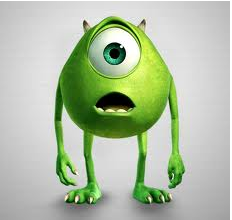
Children's Film: Monsters Inc (Opening Sequence)
Monsters Inc is an example of a children's film in the fantasy genre. Here are some of things we have noted about the opening sequence.
- Introduces the characters.
- Monster appears scary because of evil eyes and you cannot see his whole face.
- The monster starts to scream like a child and falls over making him seeming harmless and funny.
- The monsters are just as scared of children than the children are of the monsters.
- Plot is summed up/ suggested.
- Opening credits- the idea of 'doors' is introduced.
- Composed music- jazzy, upbeat and friendly.
- Main character mentioned.
- Bright and colorful character and scenes.

Children's Film: Conventions of a Fantasy Opening Sequence
Children's fantasy films need to be easily recognized as unreal, but still enable the children to be creative with their imagination.
The character's in fantasy films are often not human and are usually set in a fantasy world. Fantasy films are made to bring out the child's imagination and let them dive into a un real world and feel like they are a part of the film, this is why fantasy films are usually the most popular films for children along with the comedy aspects which the children can relate to and understand.
Music for fantasy films is commonly non-diegetic, this means the music is added outside of the film for the audience, the music is generally lively, quite high in tempo to give of a happy jibe. This is good for fantasy films as the music can fit in easily with fantasy especially with jazzy music, or modern synth styles.
The character's in children's are sometimes animated, this clearly shows of the genre of the film and adds to the feel of the film, children become more easily attached to animated character's especially animals, that they like.
For example, Harry Potter is one of the most famous children's films.
It revolves around witches and wizards which are mythical beings. However, the characters are set at the same age as the audience and are very stereotypical characters of witches and wizards. This helps the audience relate to them. The films are situated around many surreal events which help to keep the story exciting and interesting.
Nearly all of the music within the films are non-diegetic and composed. It is largely orchestra music which fits in well with the magical theme.
The character's in fantasy films are often not human and are usually set in a fantasy world. Fantasy films are made to bring out the child's imagination and let them dive into a un real world and feel like they are a part of the film, this is why fantasy films are usually the most popular films for children along with the comedy aspects which the children can relate to and understand.
Music for fantasy films is commonly non-diegetic, this means the music is added outside of the film for the audience, the music is generally lively, quite high in tempo to give of a happy jibe. This is good for fantasy films as the music can fit in easily with fantasy especially with jazzy music, or modern synth styles.
The character's in children's are sometimes animated, this clearly shows of the genre of the film and adds to the feel of the film, children become more easily attached to animated character's especially animals, that they like.
For example, Harry Potter is one of the most famous children's films.
It revolves around witches and wizards which are mythical beings. However, the characters are set at the same age as the audience and are very stereotypical characters of witches and wizards. This helps the audience relate to them. The films are situated around many surreal events which help to keep the story exciting and interesting.
 | |
| Harry Potter and the Philosopher's Stone |
Monday, 4 October 2010
Children's Film: Star Wars IV (Opening Sequence)
The film starts with pitch black as intense music plays to build up the tension. A space ship slowly moves into the frame and shows it being shot at by another ship. this sets the scene and informs the audience of what is happening.
 The action is then shown on board as troops run around with guns. They are all dresses the same to show they are organized and well equipped. the inside is white and clean which would suggest it is the 'goodies' ship. there is then a clip of two robots (R2 and C3PO) C3PO has a friendly voice and looks kind. this reinforces the idea the ships is full of good people who are under attack.

Children's Film: Spongebob Squarepants (Animated Character)
Children's film characters have to be funny, friendly and non-aggressive, Sponge-bob is all of these. Sponge-bob is funny in ways which the children can relate to and the somewhat repetitive scenario's he is faced with ensure that there is always going to be a laugh in the episode for all the children.
The way Sponge-bob looks is out of the ordinary, funny and brightly coloured, these all appeal to young children. The look of the main character in children's programs is very important as this is one of the first things children will be drawn to, rather than the actual story line, they are more interested with what they see, funny faces, loud noises, general mischief.


Friday, 1 October 2010
Preliminary Task: Editing & End Result
Today we edited the footage that we took on Tuesday. We've used cuts and some fading transitions for the audio/sound. We chose to import some songs as well "Haven't Met You Yet" by Michael Buble and "Bella's Lullaby" from Twilight. Above you can see the end result.
Thursday, 30 September 2010
Preliminary Task: Filming
Today we have filmed our sequence, we have tried to stick to the storyboard we made yesterday. However we have made a few changes which would probably be seen in the final edit. we've used different angles and multiple shots so that we have more to work with when editing. For example we filmed the staircase shot multiple times from different angles so that we can edit it in a match on action cuts.
We have captured our video into final cut express ready for editing in our next lesson. We have decided that George and Sam will be editing the video, adding appropriate cuts and transitions. Jack and Charlie will be creating the soundtrack using garageband.
We have captured our video into final cut express ready for editing in our next lesson. We have decided that George and Sam will be editing the video, adding appropriate cuts and transitions. Jack and Charlie will be creating the soundtrack using garageband.
Monday, 27 September 2010
Preliminary Task: Storyboard
Storyboards are very important. They help the director stick to a plan and helps prevent the film seeming random and in the wrong order. It also helps if a person is ill or away as the other people in the group know what that person wanted from the piece of film/performance.
When there is a storyboard you also do not have to film in the chronological order of the story.
We will need a camera and a tripod to film our story. we will have paperwork as a prop for the character to drop.
Our shot list is a written out version of our story board. This prevents any confusion if pictures are not clear.
When there is a storyboard you also do not have to film in the chronological order of the story.
 |
| Our storyboard. |
 |
| Our shot list. |
Our shot list is a written out version of our story board. This prevents any confusion if pictures are not clear.

Preliminary Task: Camera Shots
 |
| Establishing shot |

The shot informs the audience of the characters surroundings and who is in the scene. It shows that these three characters are all doing to school, so they are still about 16-18.
 | |||
| Close up |

It draws attention to the reaction/action of a character. This makes us feel what they are feeling and understand them. This is from a low angle which shows that the character has a higher authority, and makes him look more threatening.

 |
| Match on action shot |

This shot shows the audience an action from two perspectives. It shows that this character is quite defensive, and stupid because he's punching a fish - it's almost barbaric.
 |
| Reaction shot |

The shot taken when a character first enters the scene.The shot shows the feelings and position of the character and helps us to understand how they feel.Another reaction shot showing that the character is pleased to see someone.
 |
| Long shot |

This shows the whole scene and tells us where the characters are. It could also be classified as an establishing shot, which shows us the scene. It shows that not much is happening in the scene, and everyone is talking in their groups.

 | ||
| Filming a conversation |

This shows the audience the reactions on the characters faces during the conversation and lets them know who is talking. The character is wearing glasses and has his tie done really well, this shows us that he is probably quite organized and possibly a stereotypical "nerd".
Subscribe to:
Posts (Atom)